
Time to harvest:
sweet potato
As of this writing in 2026, I have now grown sweet potatoes for 4 years straight from the same parent potato. When I first started growing I only grew “normal” potatoes and I ended up with less than what I put in the ground... that's how bad it turned out. While researching why I did so badly, I learned sweet potatoes grow differently so I decided I would give them a whirl.
I am very happy I did.
Not only do I get to taste the most nutrient-dense variety of potato out there, but I also get to store them and keep on enjoying them until a year later at the next harvest. What’s there not to love!
Prior to my first ever harvest, I turned to the internet out of habit to see what needed to be done. Of course the internet had varying degrees of how to handle both harvesting and curing potatoes. Then I remembered Farmer Mama used to grow these so I hit her up for the true knowledge. I am putting that knowledge here on my corner of the internet in the hopes y’all will find it and get the actual scoop of how to scoop these babies out of the ground.
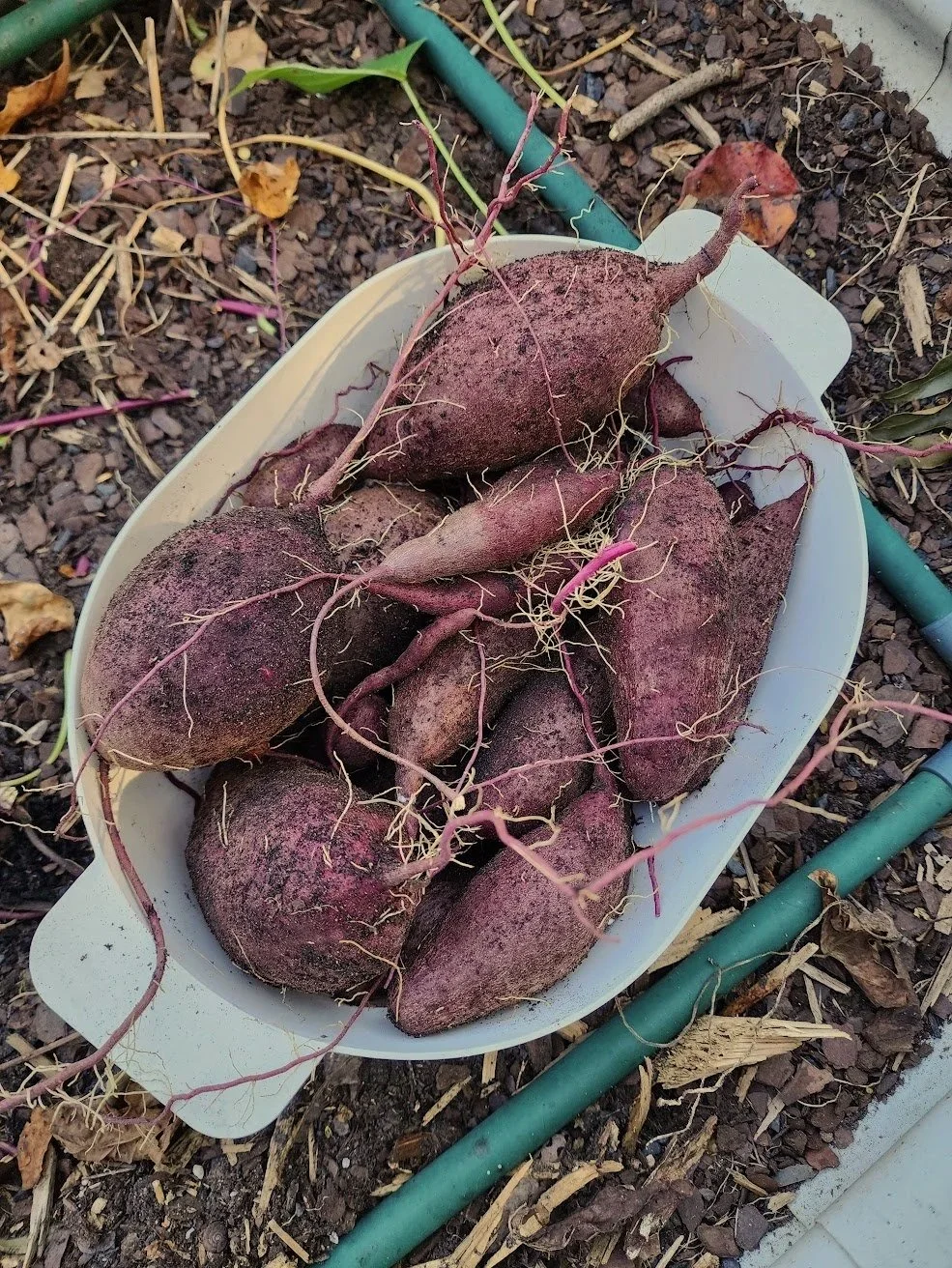
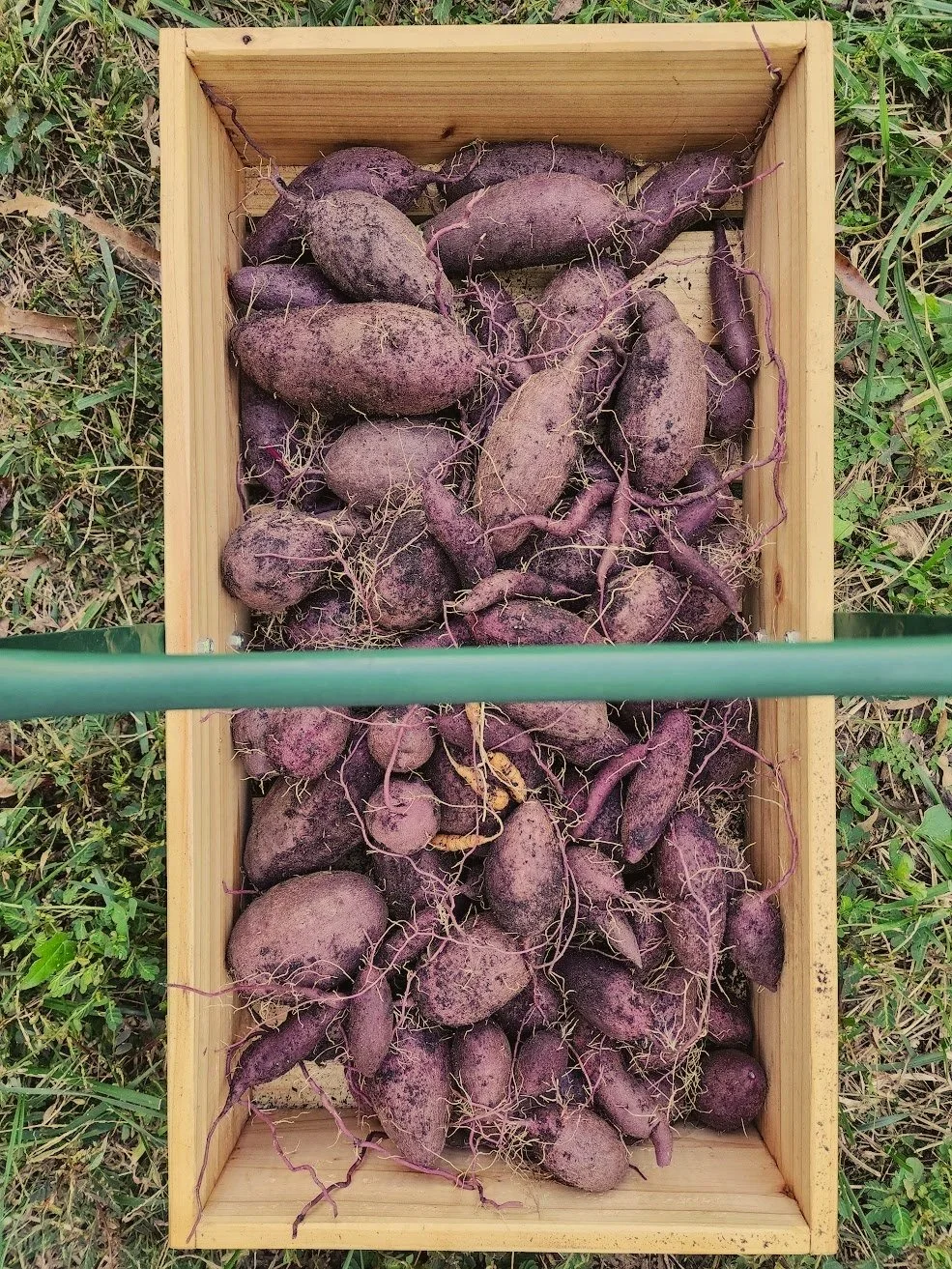
“Wait hold up…
Sweet potatoes are orange.”
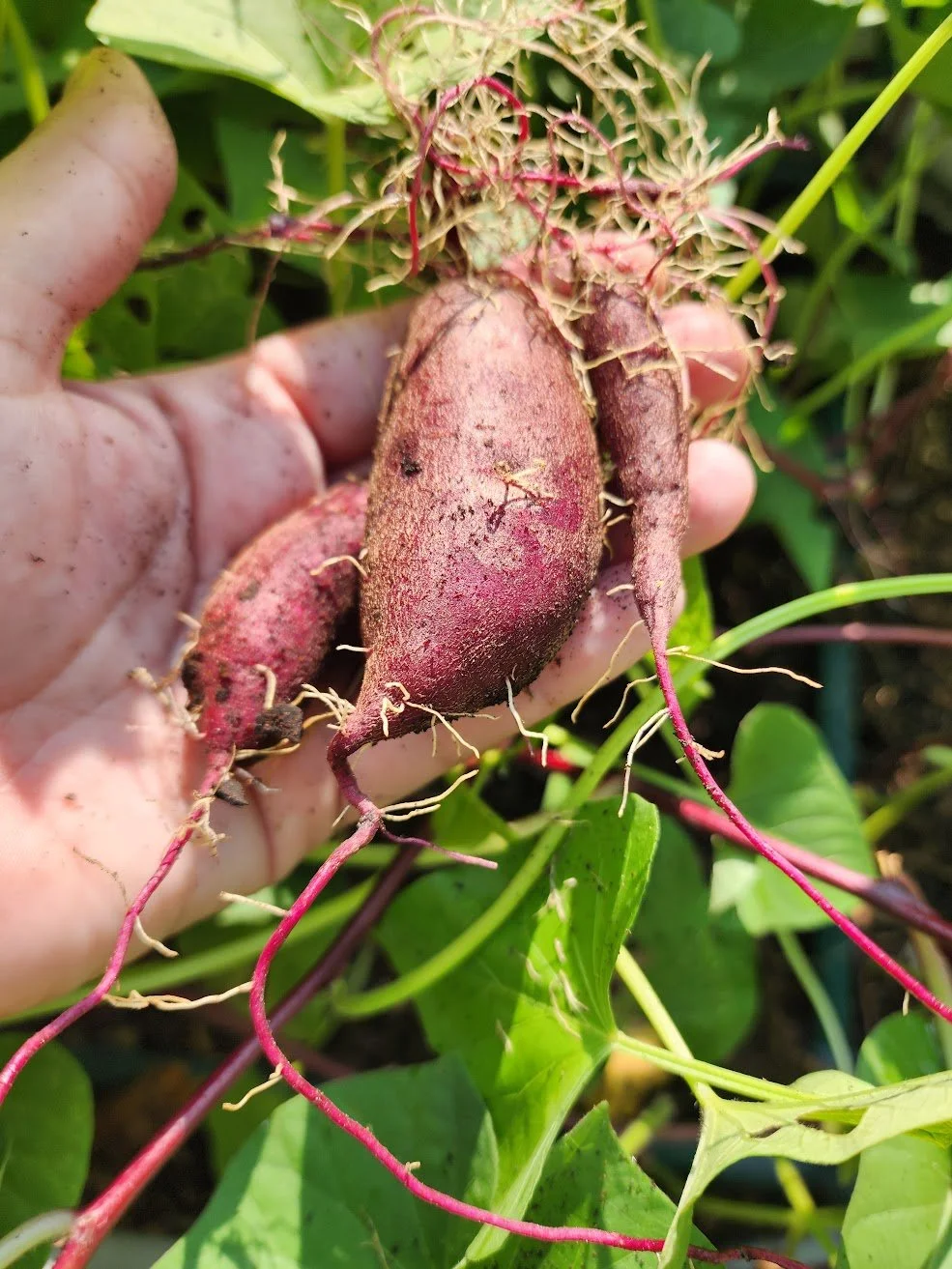
Yes and no. As with all vegetables, herbs, fruit, flowers, and every other living thing on this planet there are many varieties to choose from to grow yourself. I personally have tried over these past few years to grow both normal potatoes as well as Purple Sweet Potato and Covington Sweet Potato. While I even sourced the Covington Sweet Potato from a local farmer, it simply did not do as well as my beloved Purple Sweet Potato. It is a variety that I personally know will give me amazing harvest year after year, therefore I stick with what I know works for me. Grow what makes you happy, that’s all that matters.
If you really want to nit-pick, sweet potatoes aren’t even real. Here is some further reading on the history of the term ‘sweet potato’ versus ‘yam’ over on the Insane Archive.
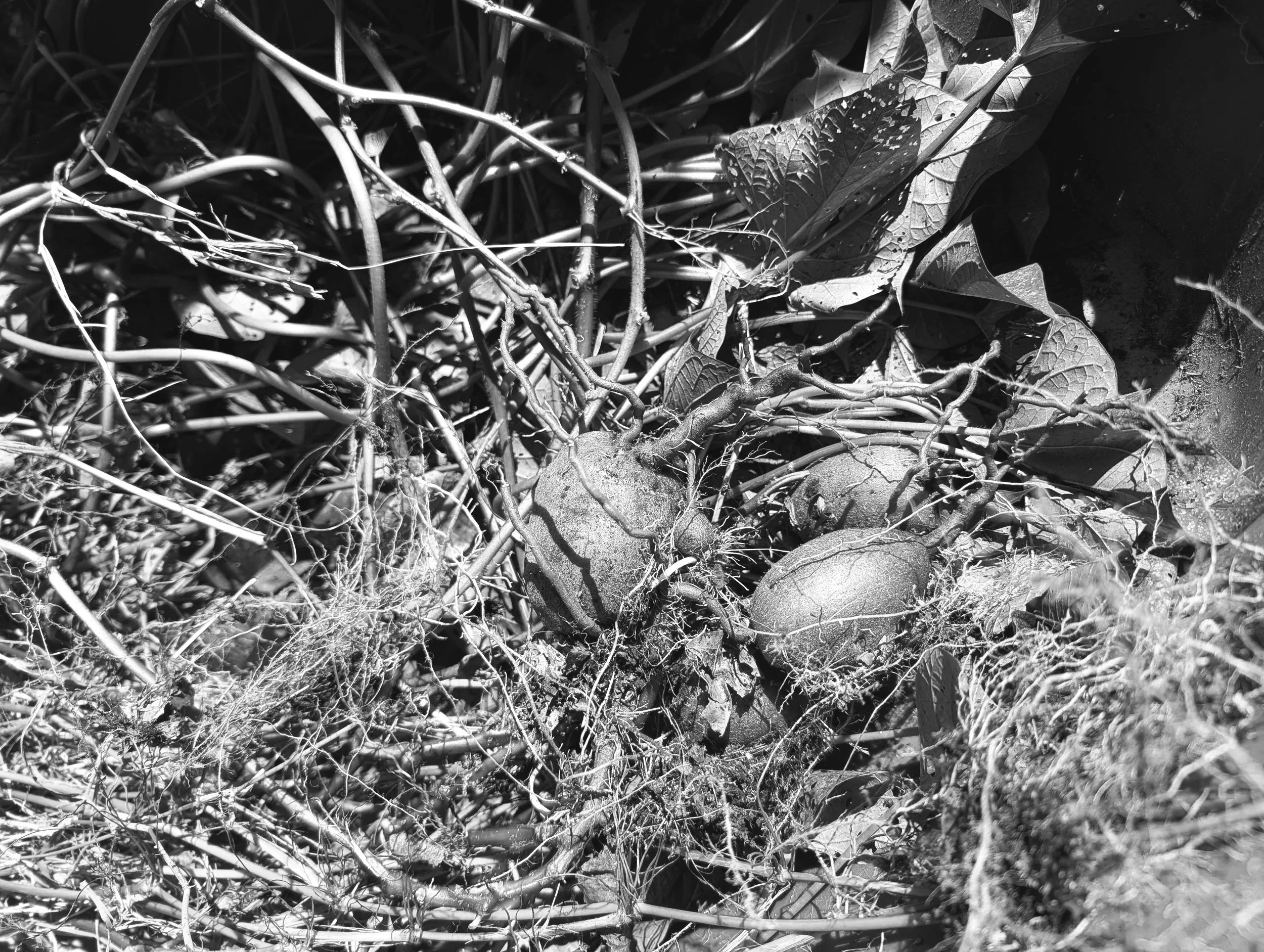
Timing is key.
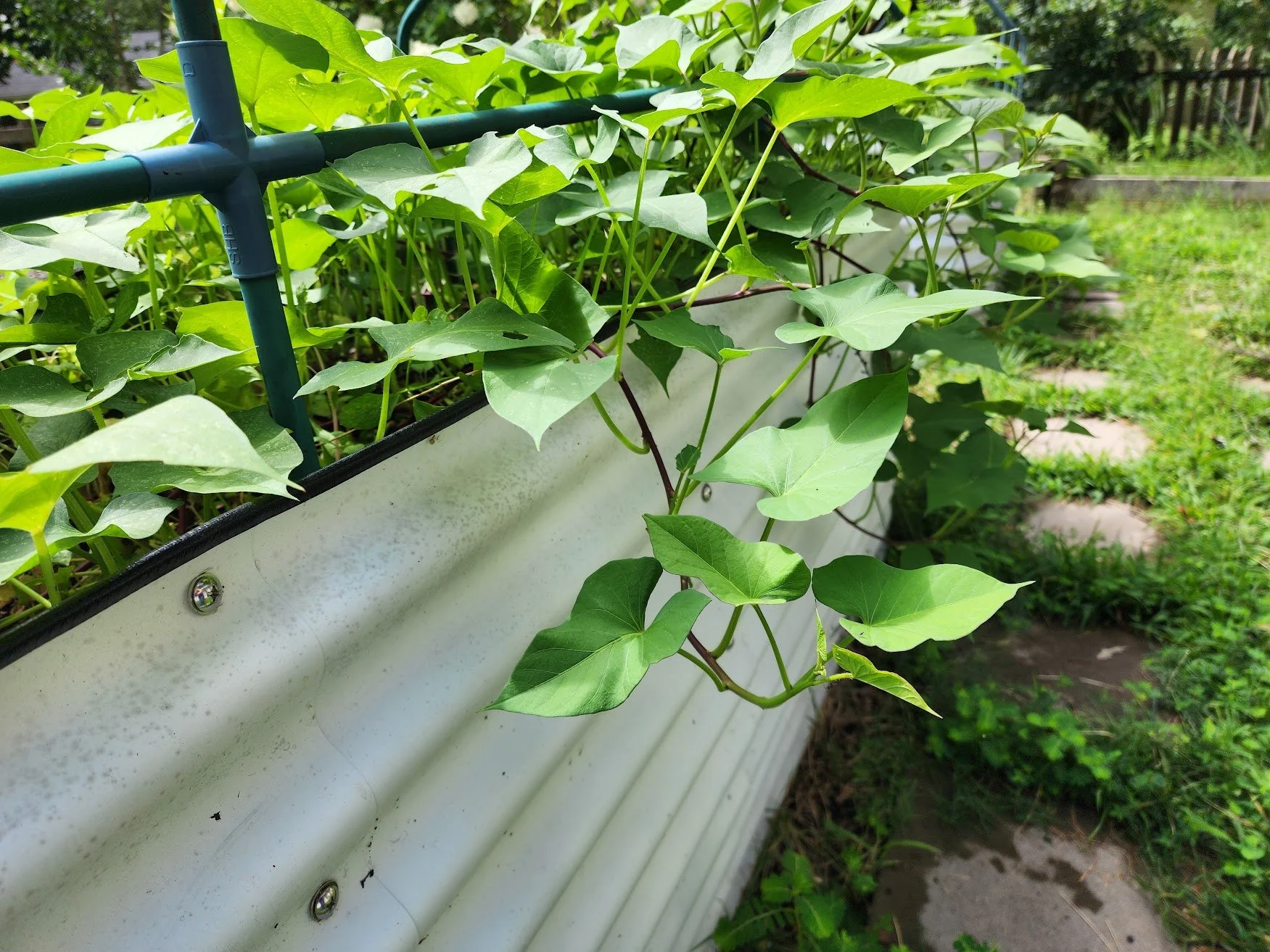
There's no need to wait until first frost, and actually it's prolly not ideal if you wait. Simply keep an eye on the forecast and any upcoming dips in temperatures below 40 degrees Fahrenheit. When it comes to the actual harvest, it's easier to dig the potatoes out if you trim back all the vines first. I did prune back the vines and leaves the deer left for me and either toss them into an empty raised bed for over-winter composting or feed to the chickens to compost them even faster. Sweet potatoes are NOT of the nightshade family but instead a cousin to the Morning Glory flower. Because they are not nightshade their leaves are edible for both human and animals
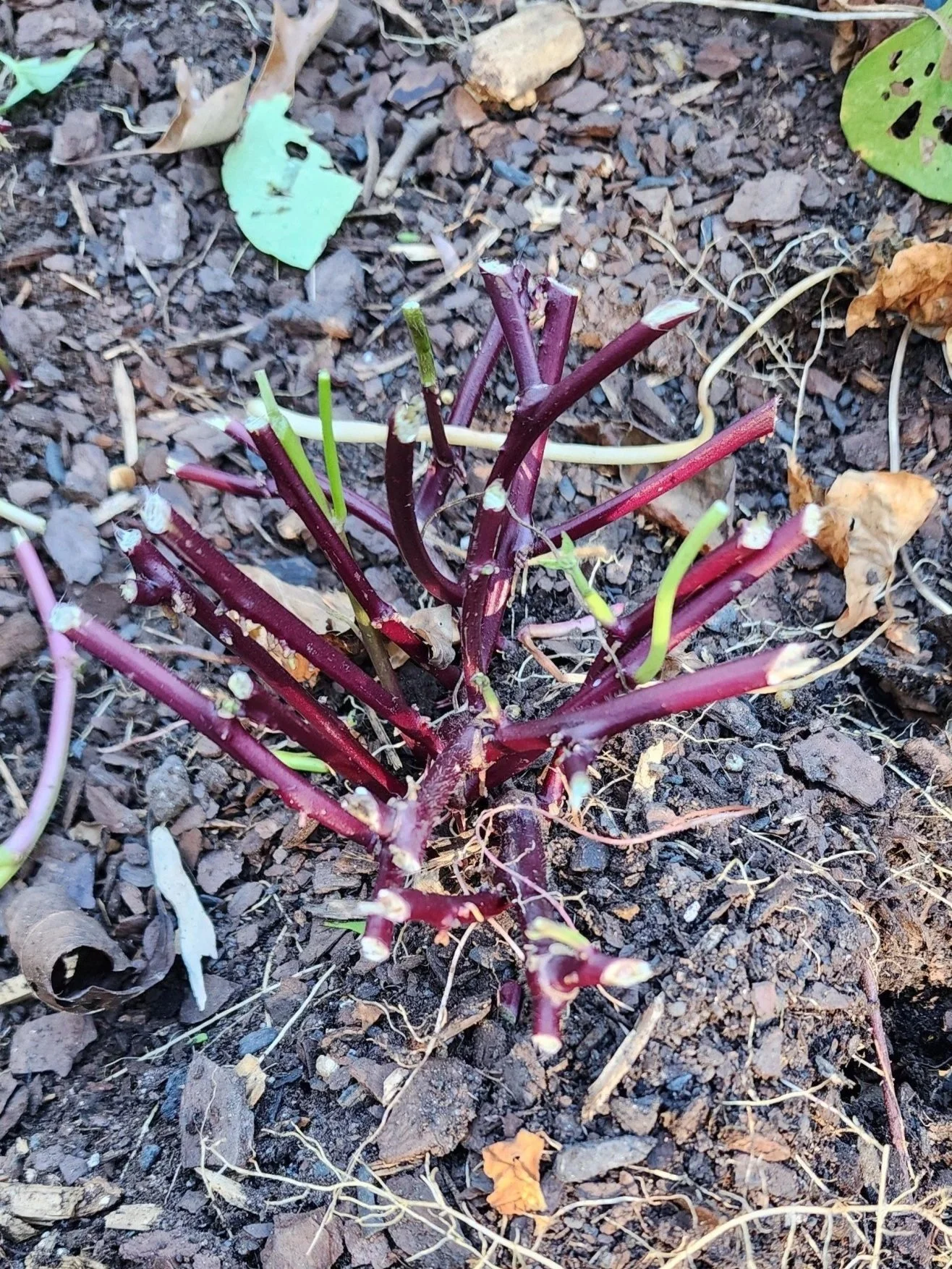
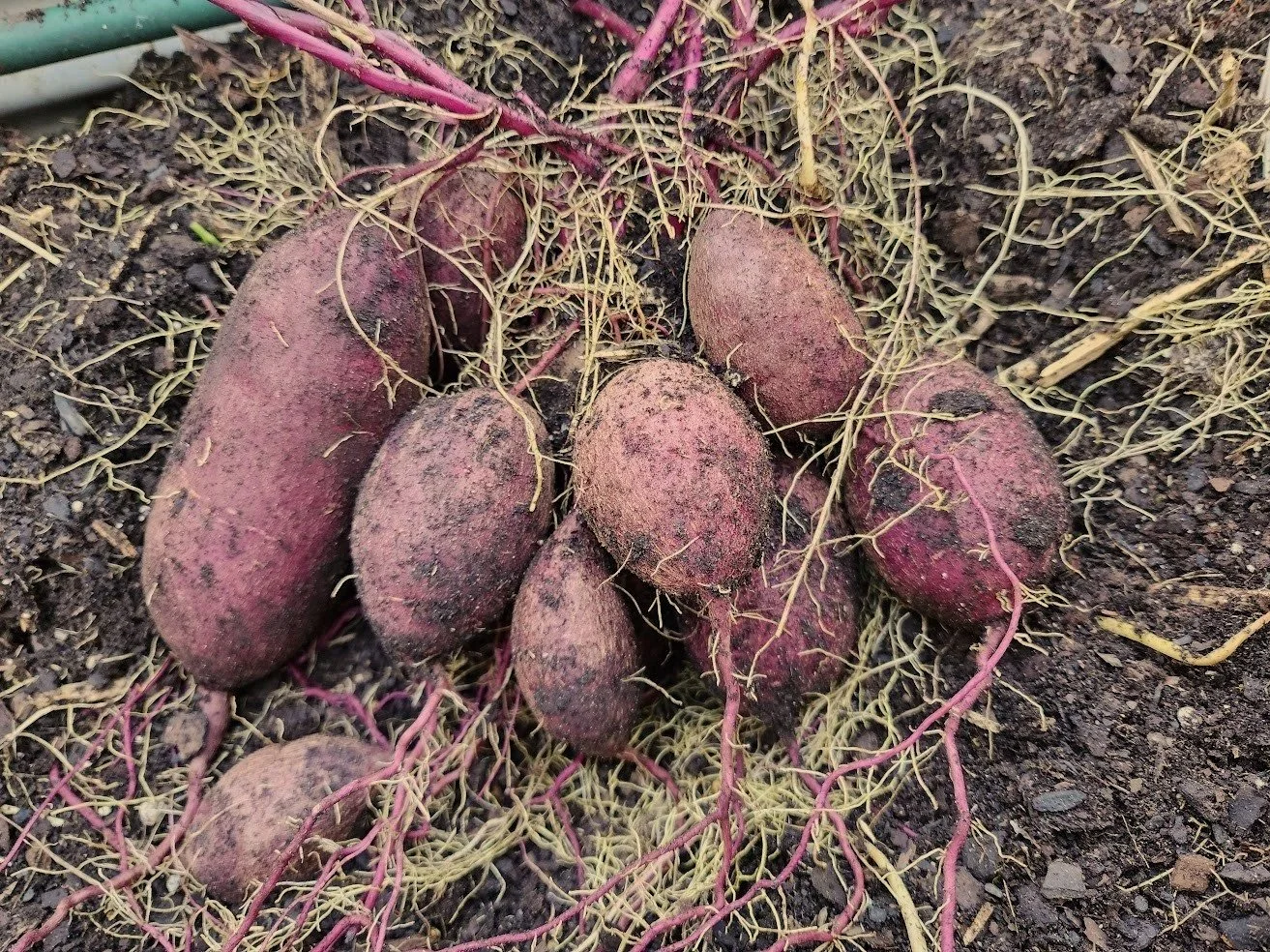
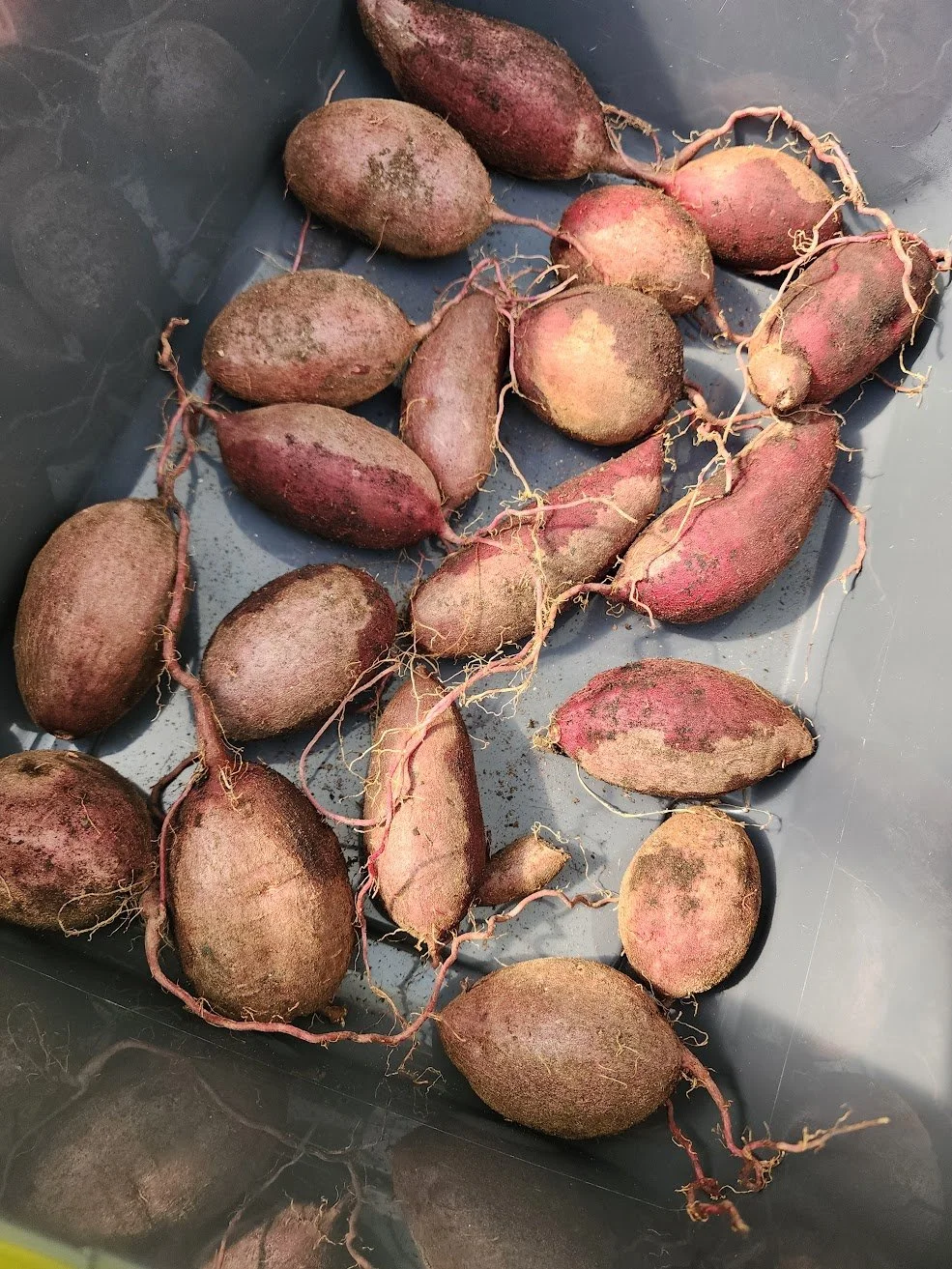
The other key to remember when it’s time to harvest is NO SHOVELS ALLOWED! This is a 100% hands on deck harvest. The shovel could pierce the skin of the potatoes, thus making them unable to cure for long term storage. The sweet potatoes don’t go further down than 8 inches below the soil, so no reason to worry too much when only using your hands. I have also learned that for sweet potatoes majority of the tubers are right under that neck, so also no real reason to dig around too much except if you want to find those baby outliers to save for slips next year.
curing for long term storage: A guide.
Potatoes of any variety, sweet or not, are always recommended by gardeners and farmers to grow because of how well they store over the winter months and possibly even longer if cured properly. The fact they can be stored for so long is why it is a staple in the kitchen garden - yes, sweet potatoes are a high yield produce plant, but they are a harvest that can be enjoyed for a very long time. In order to cure the potatoes for long term storage, there are still several steps to take before just tossing them in the pantry. The point of curing them, and their ability to store for so long, is to remove a large amount of moisture from the potato itself. While a lot of other vegetables and fruits require a dehydrator or freeze dryer to remove moister, there are much simpler steps that require no technology to do the same process with sweet potatoes.
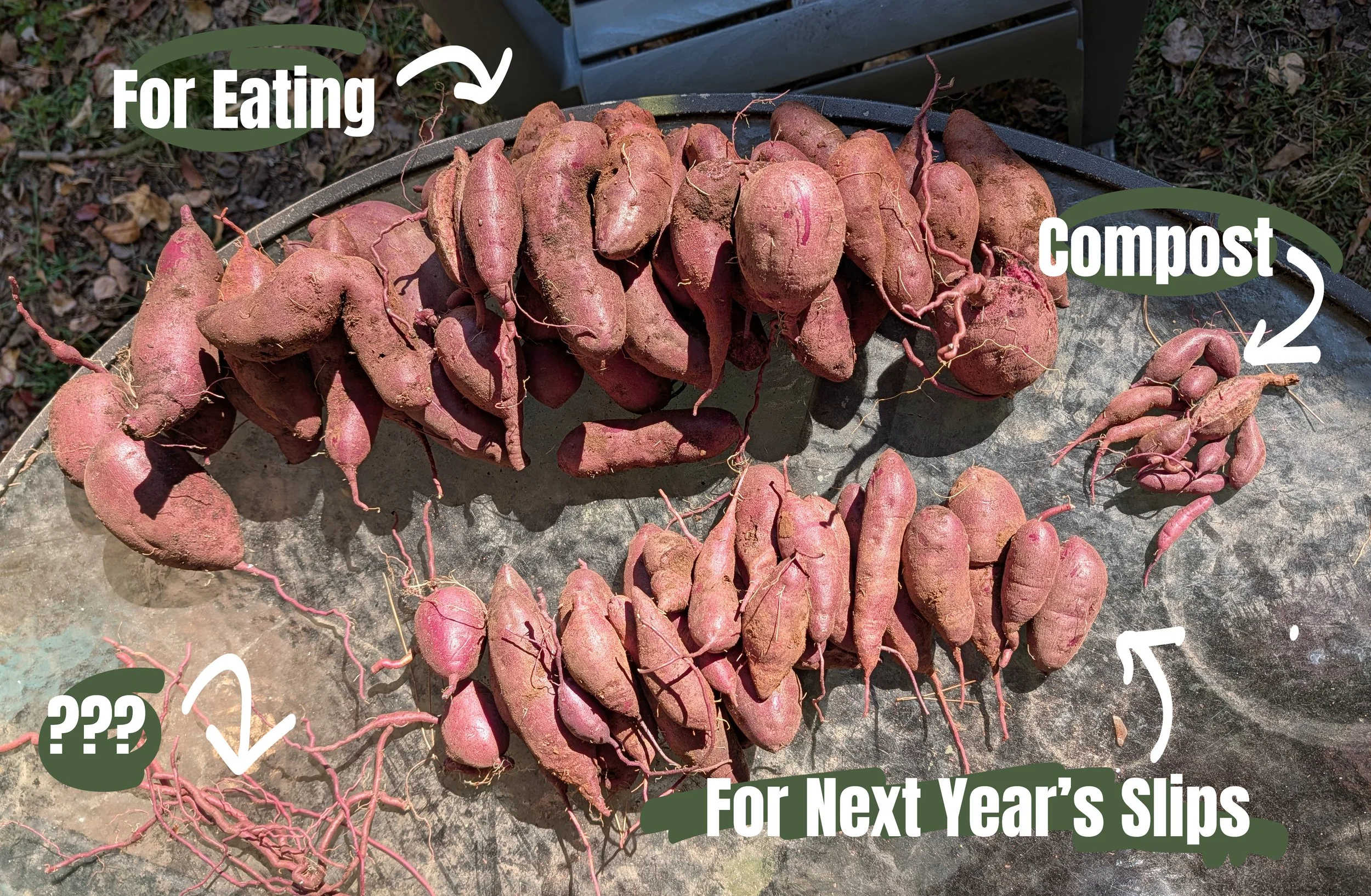
But first, you must take your harvest and sort them by size. The larger, fat sweet potatoes are perfect for eating but take longer to cure. Separate out the smaller, longer tubers into their own curing pile since they will take less time to cure and will be stored for you to create slips for your next growing season. Anything smaller than that can just be chucked into the compost since by the time the moisture is released there will be no energy left - for either consuming or for growing slips.
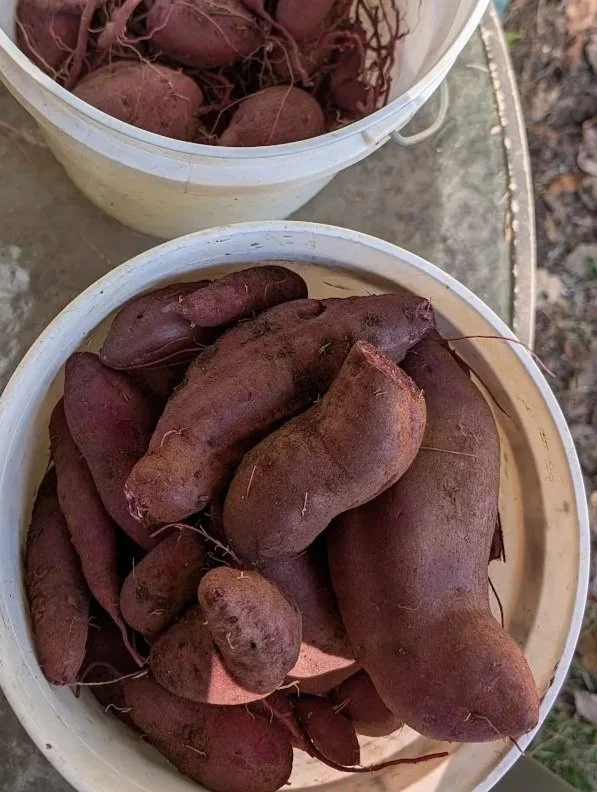
step 1: No Touching allowed
For my potatoes that I cure, I leave the roots on because I want to stick with the whole "less bugging them the better" mantra, but leaving them on is fine. The roots actually help them stay apart, keeping them stable and not rolling around everywhere and evidently touching each other. The entire point of curing is to remove moisture, not transfer it to your neighbor.
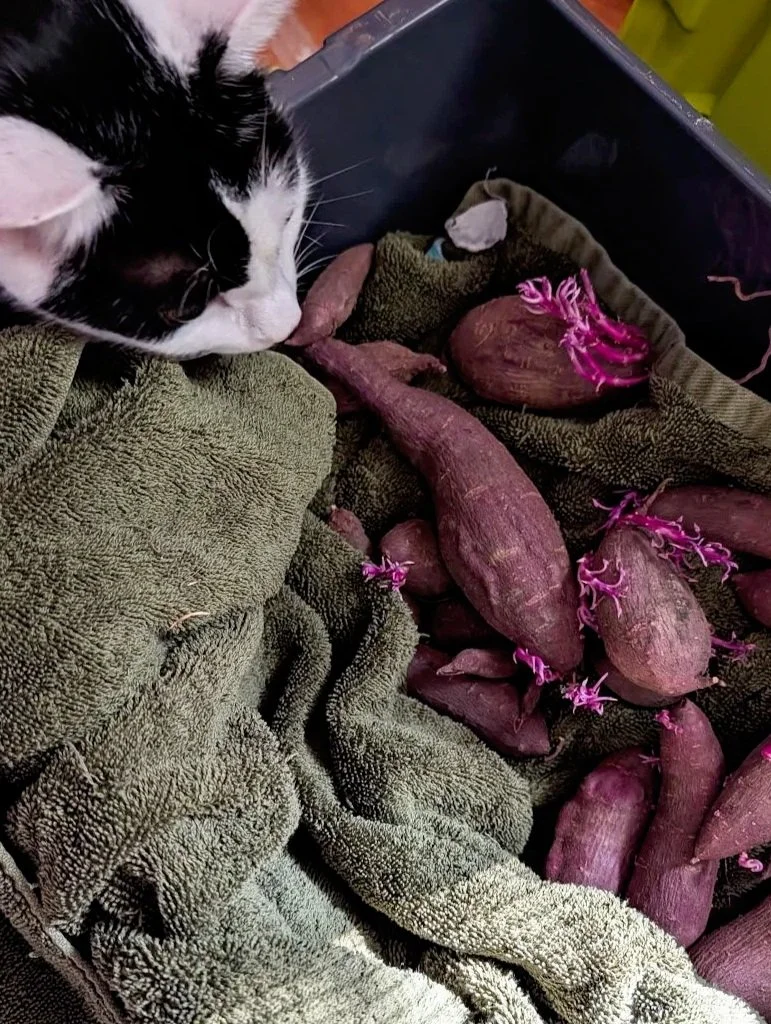
I use a towel for optimum moisture absorption, but that does mean the towels will have to be changed during the process to avoid mold. A towel or a blanket helps absorb any moisture that is in the sweet potato. But the towel does NOT mean we can ignore the no touching rule; no layers can be added on top of the towel, only the lid for the plastic bin. Why add a top? For me, it's because...
step 2: blanket or towel layering
step 3: Idle time
The perfect environment for curing potatoes is in the least used bathroom in your house. it's warm, dry, and dark the majority of the time. Downside is when you also have a house full of cats so having a box of potatoes just hanging out is just begging to be turned into a cat toy. The opaque plastic with a lid are to prevent any light from getting to the potatoes because light will trigger the potatoes to grow leaves.
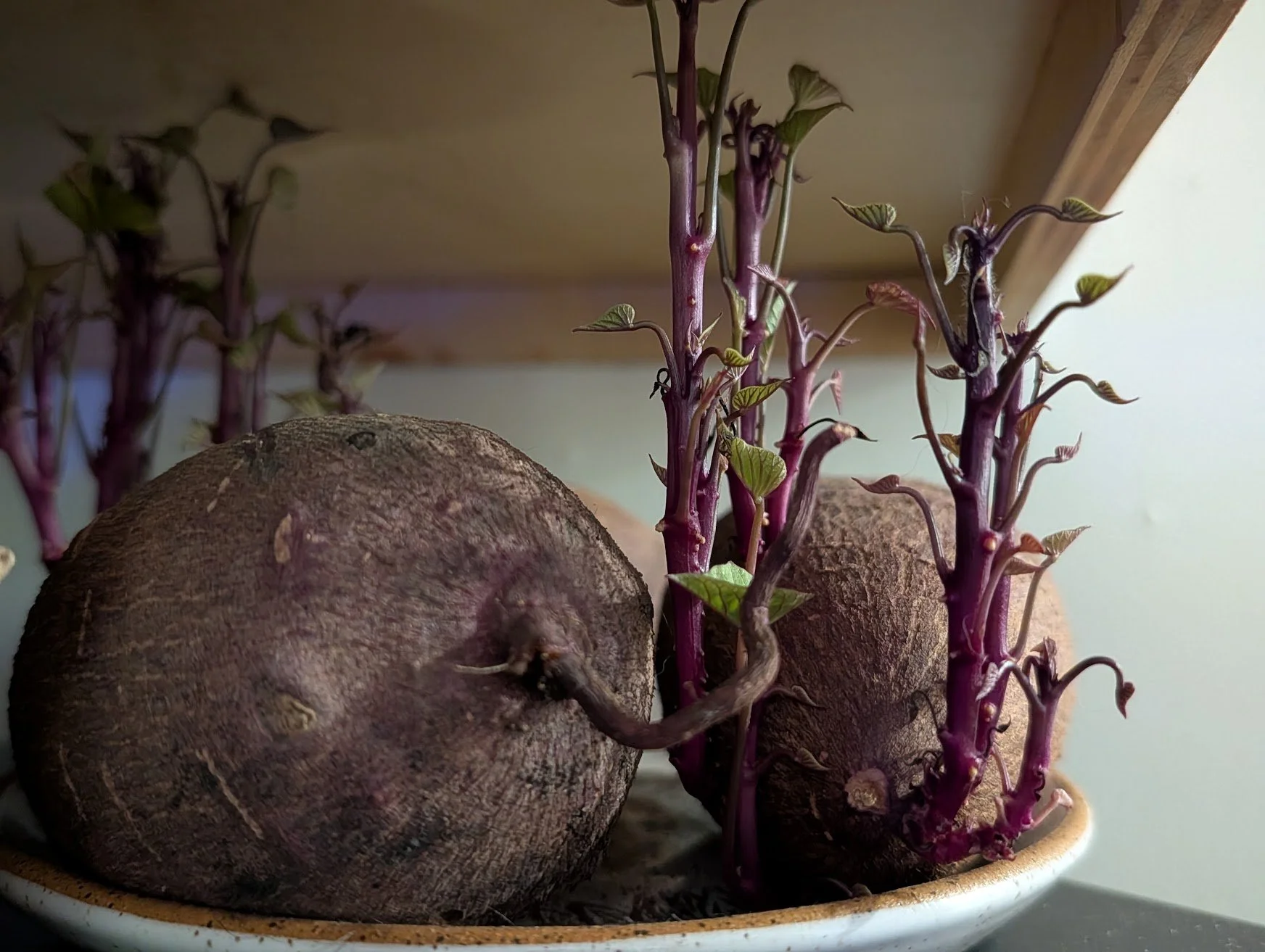
The photo on the left are potatoes stored for 3+ years. After a year, they start to grow roots to try and reproduce, so no longer viable for the perfect tasting potato but still good for growing tubers. The photo on the right are one year old potatoes that have just a hint of afternoon sun. Proof that potatoes really do last forever if stored properly!
DO NOT WASH THEM!
(Unless you need to)
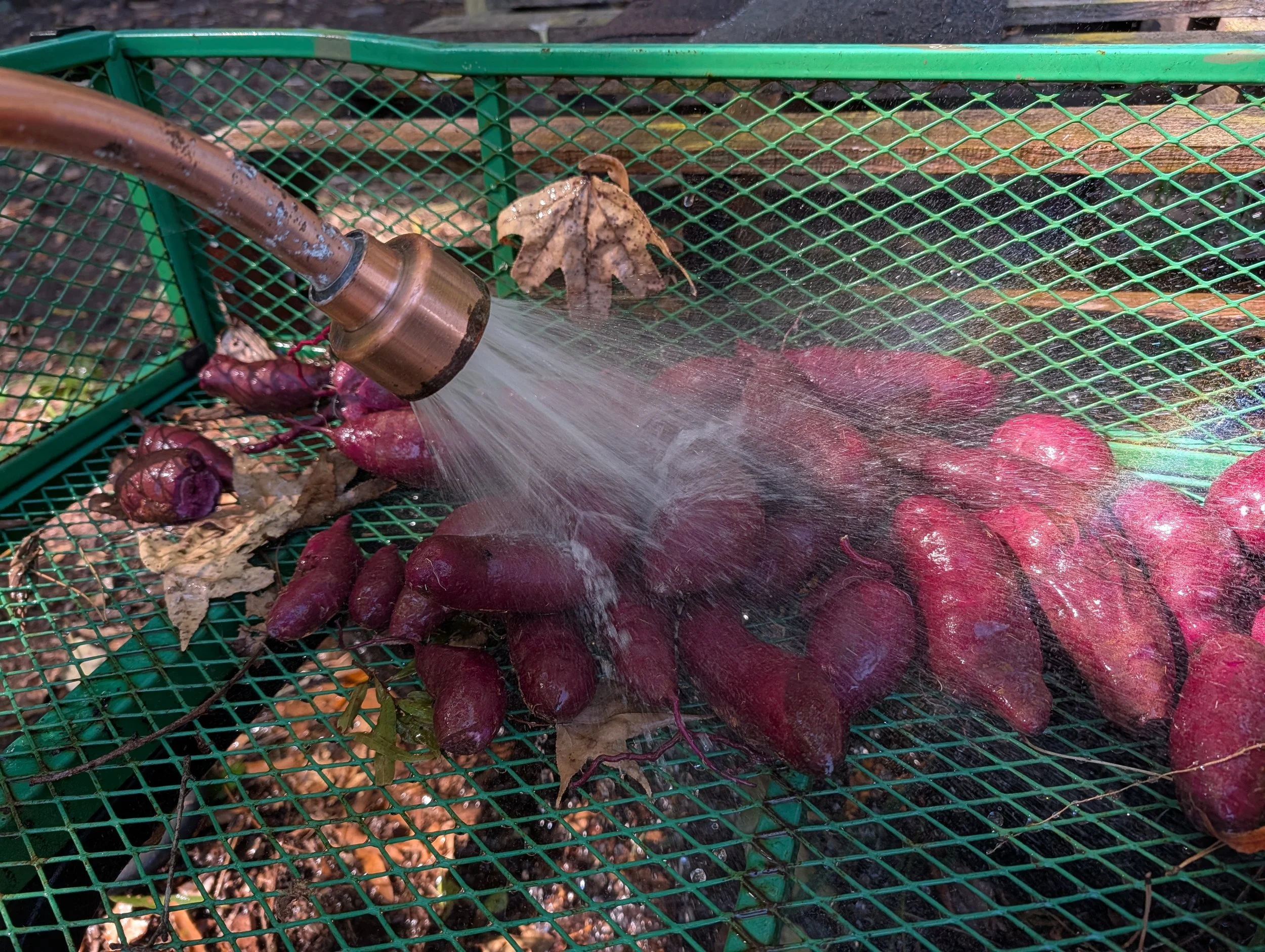
The internet was divided on this step when I initially did research, so when I asked Farmer Mama she said “absolutely not!”. She explained that washing simply adds more bruising or chance of getting nicked or ruined, and adds moisture when the whole point of curing is to remove as much moister as possible. They grew in the dirt so it's not like the soil is gonna harm them. If there are large clumps or bugs on them then brush them off, otherwise leave them be.
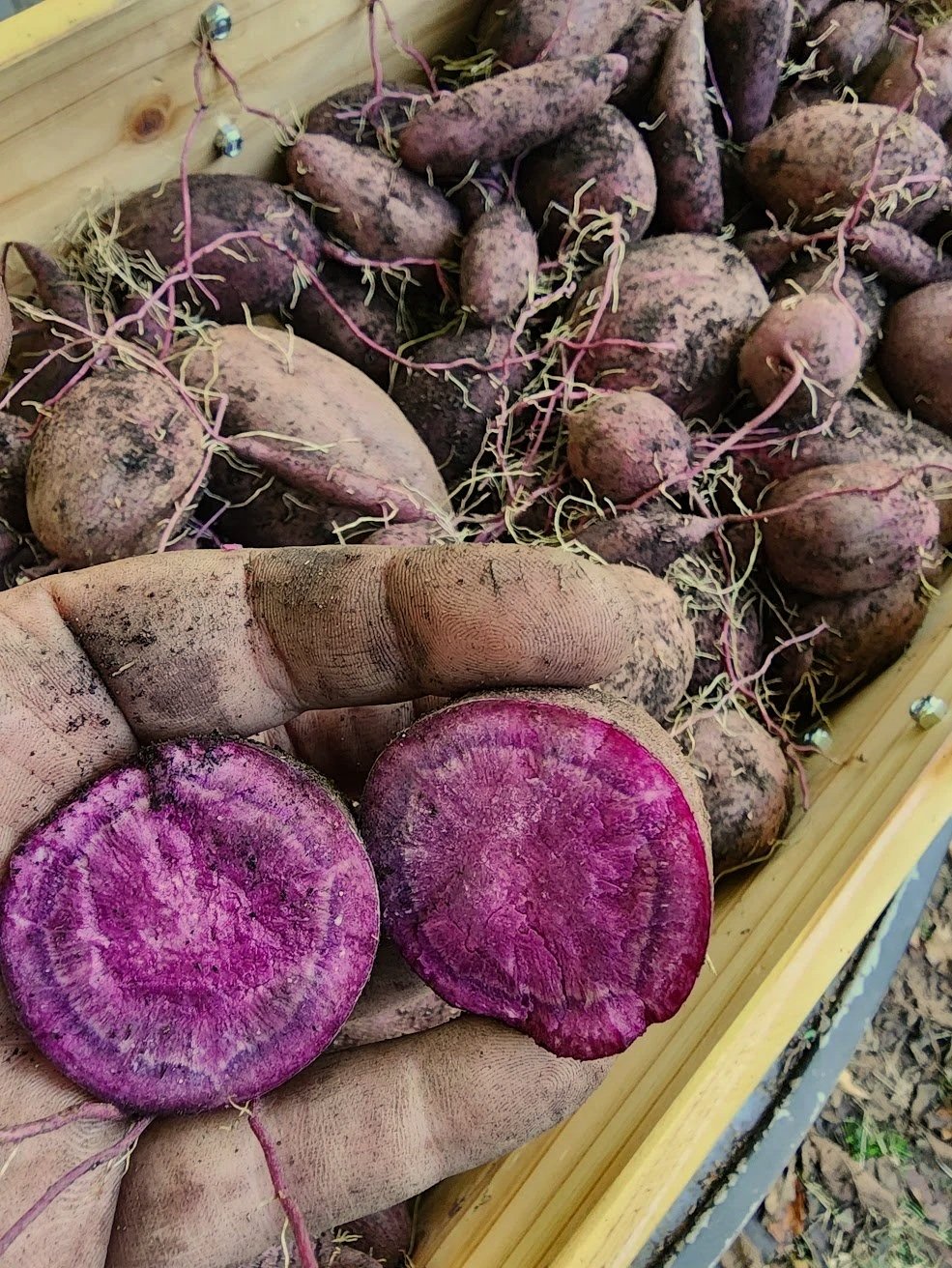
The time you are allowed to wash is if there are small cuts from a shovel that you were not supposed to use, or you have long nails, or the sweet potatoes happened to snap when harvesting because the Earth didn’t feel like giving them up. If big cuts or snaps do occur you will notice because the sucrose in the potatoes will come out - the tiny amounts of white liquid. When this happens, go ahead and wash immediately and process them for a different long term storage such as freezing, or plan to have some with dinner that night.
Side note: best to wash the potatoes outside unless you want to clog your plumbing with clay and soil.
How to prep for freezer storage:
My very first mistake I made my first year harvesting sweet potatoes for freezer storage was that I boiled the potatoes. In my head I was like “OK, they’re going to be mashed so just prep them like mashed potatoes!” Not only does that release a lot of the nutrients that are so dense in the purple sweet potatoes specifically, but also turns the water blue and now you have a blue crime scene all around your stovetop.
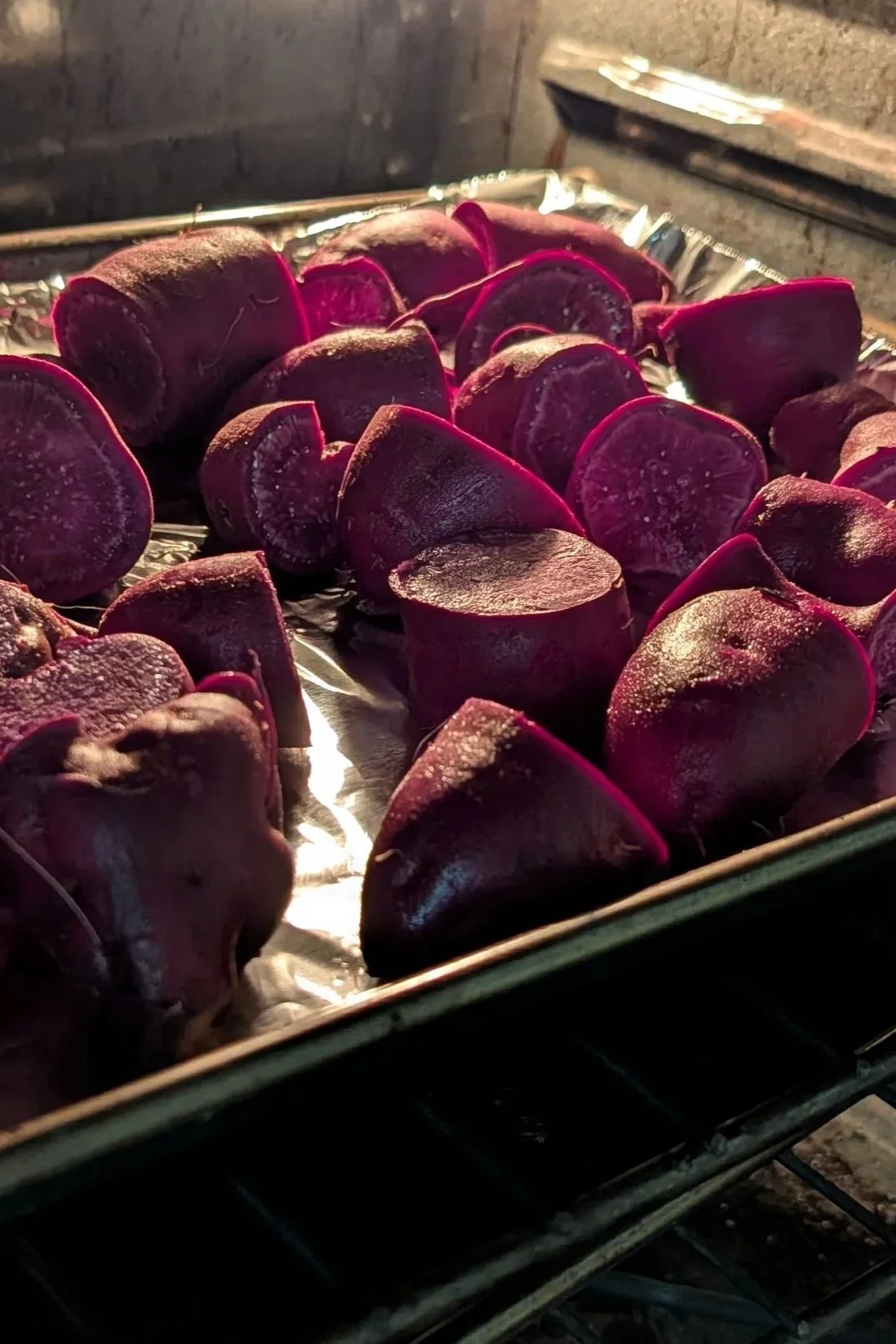
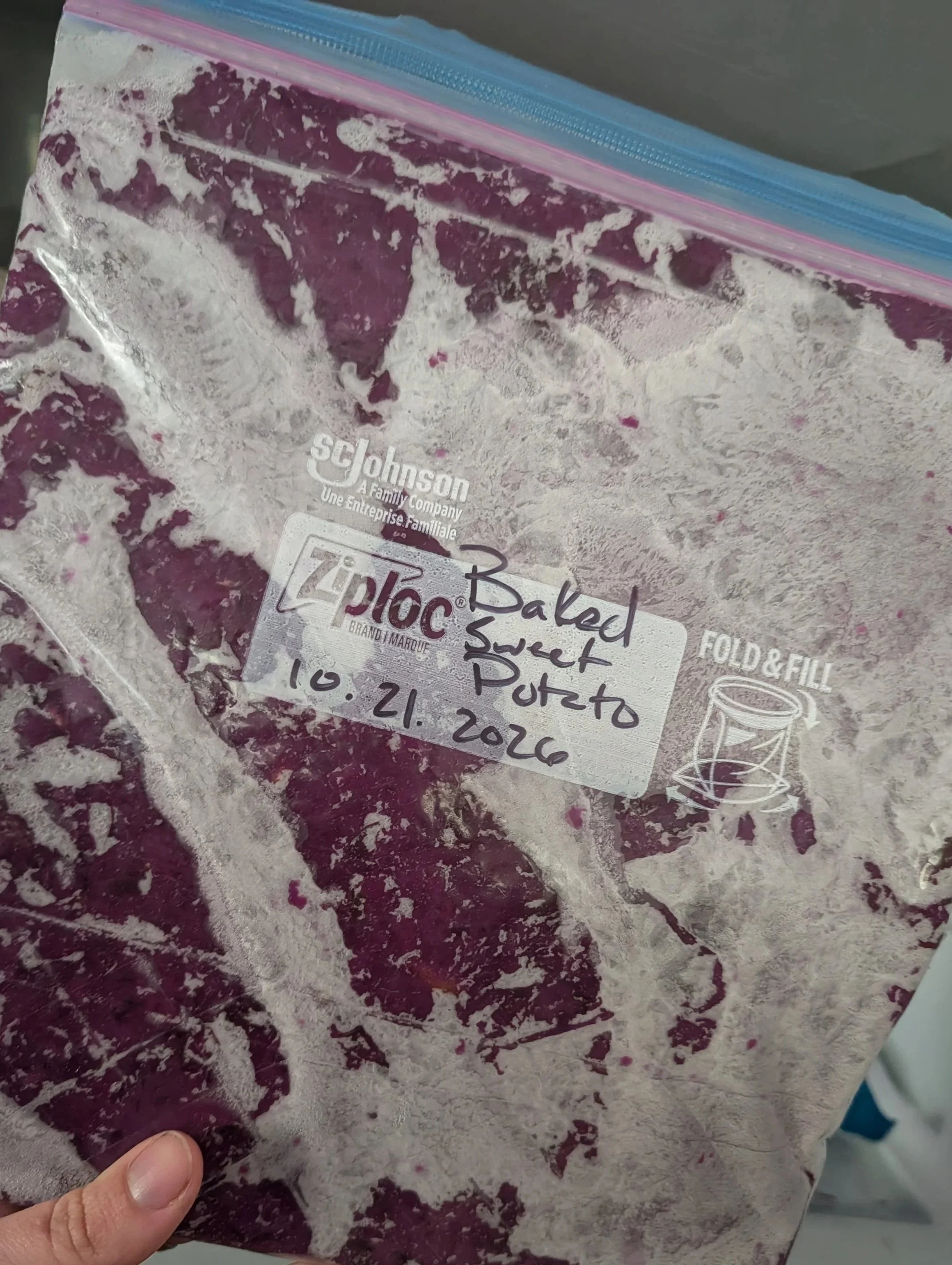
Instead, cut your sweet potatoes up into as-equal-as-you-can pieces and bake in the oven. Everyone’s oven is different and has a personality (just ask any baker) so I know that for my old oven that cooks unevenly that a high temperate of 425°F was needed to bake, uncovered, and rotated after about 10 minutes. Around the 15 minute mark is when I start to poke the potatoes, and when the fork can cleanly pierce the potato without any struggle, then out of the oven they come to cool before placing in zip top bags and into the freezer.
Again, personally, I store one bag that is the exact amount for a sweet potato pie that I shall make during the upcoming holidays, and the rest go into the Tetris cubes for whenever I want a nice base to a stir fry or a sweet side to breakfast.